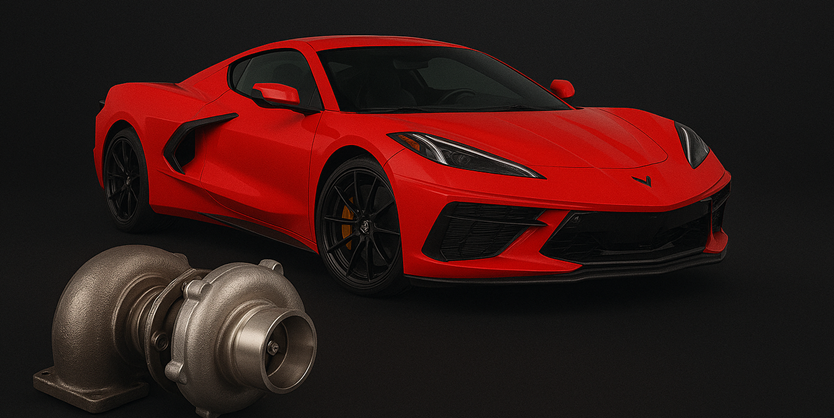
Most supercar owners start the same way: change the wheels, add a louder exhaust, maybe bolt on an intake, and hope the car will feel transformed.
For a few drives, it does feel different. But soon you notice the truth: the car looks wilder and sounds louder, yet it doesn’t feel truly faster, sharper, or more responsive.
That’s where smart supercar tuning comes in.
With Keller Performance, you go beyond cosmetic bolt-ons to a complete strategy: high-flow downpipes, performance exhaust systems, and precise DME/ECU tuning that work together to deliver real, repeatable gains in power, torque, and drivability.
This guide walks you through the smarter way to upgrade your supercar -focusing on performance, reliability, and control, not just noise.
Why “Bolt-Ons Only” Isn’t Enough
Basic bolt-ons like intakes, tips, and generic exhausts can actually hold your car back when they’re not supported by proper ECU remapping and supporting hardware.
Common issues with a bolt-on-only approach:
- Poor, uneven airflow paths
- Excess heat build-up around the turbos and engine bay
- An engine still stuck in restrictive stock ECU settings
- Unreliable or inconsistent power delivery
If your car is still running the factory ECU map, the fuel, boost, and airflow tables are not calibrated for your new hardware. The result:
- Turbo behaviour remains restricted
- Power stays locked behind conservative safety limits
- Reliability can drop as the engine fights the mismatch
A smart supercar tuning strategy looks at the entire system—airflow, exhaust flow, thermal management, and software calibration—not just one shiny part.
This is exactly where Keller Performance stands apart, combining precision hardware with advanced ECU/DME tuning software to create a complete, well-matched package.
Design & Engineering Insight from Keller Performance
“Craftsmanship” is the word that best describes Keller’s philosophy. Their team designs exhaust systems and precision performance upgrades for extraordinary automobiles, and that promise is reflected in every weld, bend, and calibration.
Hardware Excellence: Performance Downpipes & Exhaust Systems
Keller Performance hardware is engineered for demanding supercar and high-performance applications, not generic tuner builds.
- Built from T304 stainless steel for durability and heat control
- Designed for exact fitment on exotic models like Ferrari, BMW M, Mercedes-AMG, Porsche, and more
- Welded and shaped with professional-grade precision for consistent flow
- Optimised to reduce backpressure and exhaust gas temperatures
These are high-end performance modifications designed to withstand track days, spirited road driving, and high-boost applications. They’re a world away from generic, off-the-shelf bolt-ons.
Software Precision: DME Tuning & ECU Remapping
Hardware is only half of the equation. To unlock its full potential, you need software precision.
Keller’s DME solutions use AI-assisted tuning software to accurately adjust:
- Ignition and injection timing
- Boost control and torque limits
- Fuel delivery and air-fuel ratios
- Throttle response and driver-request mapping
Done correctly, supercar ECU remapping and DME tuning deliver:
- Sharper throttle response
- Stronger mid-range torque
- Cooler, safer running temperatures
- Long-term reliability with consistent power
This is what turns your build into a proper Stage 1 or Stage 2 supercar tune, not just a loud exhaust with no real gains.
Mapping Out Your Supercar Upgrade Path
Every successful supercar tuning package starts with a clear plan. Keller Performance helps owners move step by step instead of guessing.
Step 1: Define Your Use Case
Be honest about what you’re building for:
- Daily street use and fast road driving
- Weekend track days and occasional time attack
- Full race or competition conditions
Your goals determine the right combination of downpipes, exhaust, intercooler, and DME tune.
Step 2: Select the Right Hardware
Choose platform-specific performance hardware rather than mixing random brands.
For example:
- Ferrari F8 Tributo downpipes and exhaust upgrades
- BMW G80 M3 / G82 M4 performance downpipes
- Mercedes-AMG GT63 downpipes and cat-back systems
Keller Performance designs components around each platform, so fitment, flow, and sound are optimised for your exact car—not just “something that fits.”
Step 3: Match Hardware With Software
Once the hardware is chosen, DME tuning is written for the exact model, year, and setup.
The tune is calibrated to match:
- Airflow and boost targets
- Fueling, timing, and torque management
- Expected operating temperatures and driving conditions
This is how you get the most from Stage 1, Stage 2, or even more advanced setups while maintaining stability and safety.
Step 4: Professional Installation & Calibration
Smart supercar tuning always uses a specialist installer.
After the installation:
- The car is dyno-tuned for local fuel quality, weather, and altitude
- Logs are reviewed to confirm safe AFR, EGT, and boost levels
- Any small adjustments are made to achieve smooth, strong power delivery
Step 5: Validate & Monitor
Once the car is tuned, the work isn’t over—validation keeps your investment safe.
Key parameters to monitor:
- Coolant and oil temperatures
- Fuel trims and long-term adaptations
- Boost levels and target vs. actual boost
- Street and track performance data and driver feedback
This is how you confirm that your gains are real, stable, and repeatable in the real world—not just numbers on a dyno sheet.
Common Tuning Pitfalls & How Keller Helps You Avoid Them
Guesswork and cheap shortcuts create most tuning horror stories. Here are some frequent mistakes—and how Keller’s approach prevents them.
Pitfall 1: Ignoring Emissions & Inspection Rules
Changing exhaust components without checking local laws can lead to:
- Failed inspections
- Fines and forced reversions to stock
Keller’s approach:
Help you choose between catted vs catless downpipes and advise on options suited to your local regulations and use case.
Pitfall 2: Mixing Random Hardware Brands
Combining mismatched parts can cause:
- Poor fitment and clearance problems
- Increased heat soak and under-bonnet temperatures
- Weird sound characteristics and vibration
Keller’s approach:
Provide platform-specific performance kits where hardware is designed to work together, with carefully planned flow paths and mounting points.
Pitfall 3: Upgrading Hardware Without Proper Tuning
Running upgraded hardware on a stock map can lead to:
- Knock and pre-ignition
- Overheating and component stress
- Unpredictable power delivery
Keller’s approach:
- DME and ECU maps tested for each application
- Calibrations designed to protect reliability while unlocking power
- A balanced package where hardware + software + setup work as one
Conclusion: The Smarter Way to Tune Your Supercar
True supercar performance tuning is not about stacking flashy bolt-ons.
It’s about creating the right balance between hardware, software, and setup so your car delivers controlled, repeatable, and reliable power every time you drive it.
Keller Performance tuning offers a safer, smarter way to get real gains:
- Engineered performance downpipes and exhaust systems
- Intelligent DME/ECU remapping for your specific model
- A structured upgrade path instead of random modifications
Explore the Keller Performance catalogue, speak with an expert, and start planning your upgrade path today. And keep an eye out—upcoming build stories like the BMW G80 M3 and Ferrari 488 GTB will show you exactly what’s possible with a carefully planned performance package.
